

Planning your stand
A good expo stand should feel easy to enter, simple to browse and comfortable for parents moving with prams or toddlers. This guide covers layout, staffing, stock, demos and small practical details that help the day run better.
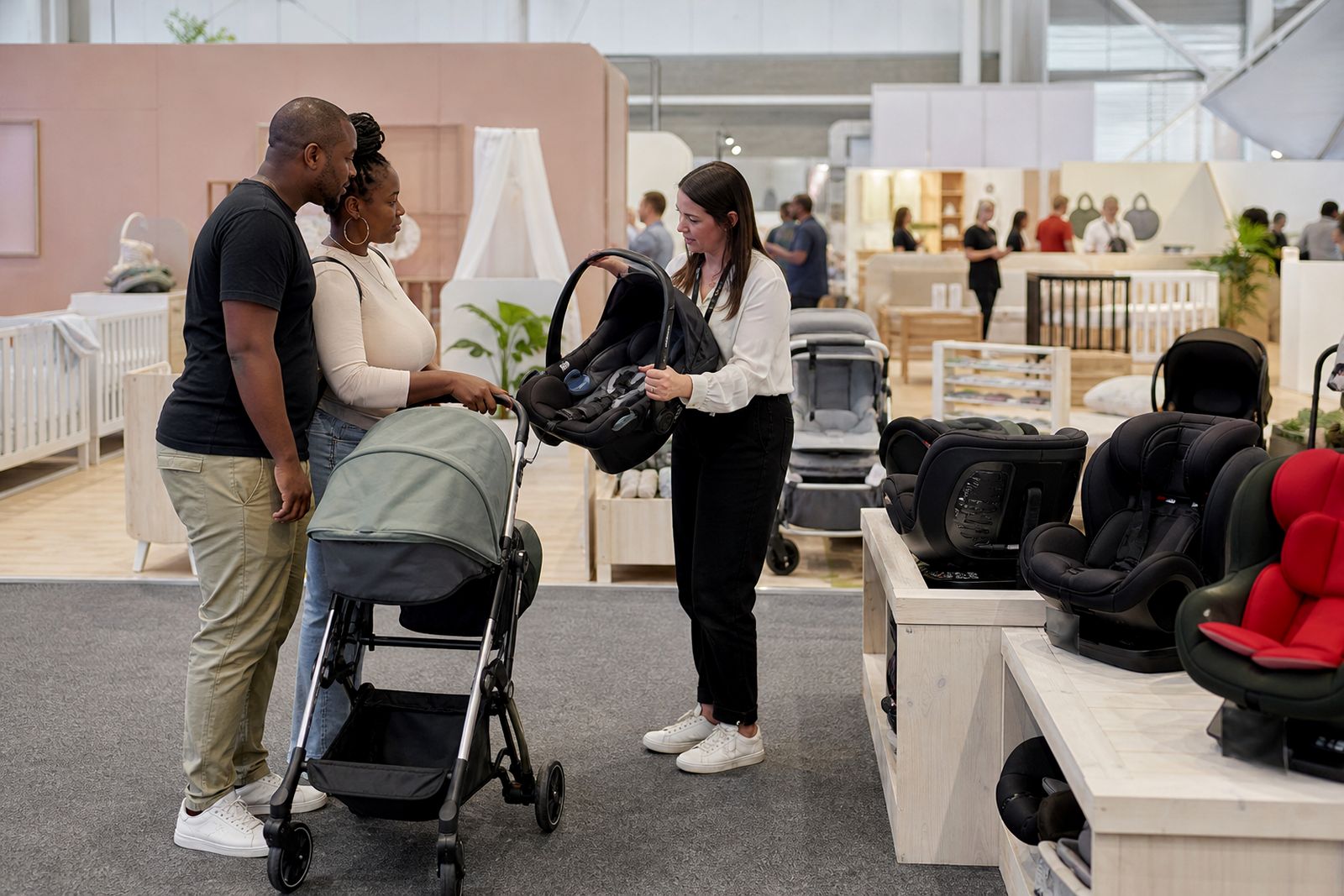
Start with how families move
Parents do not arrive at a baby and toddler expo the same way visitors do at a general consumer show. Many are pushing prams, carrying nappy bags, or keeping a toddler close while trying to compare products. That changes how your stand should work. The first thing to plan is not the backdrop or the product table, but the path people take when they stop, turn, ask a question and move on again.
Leave a clear front edge so a pram can pause without blocking the next family. If visitors need to squeeze sideways just to enter your space, they often keep walking. A stand with a clean entrance, one obvious welcome point and room to turn is easier for everyone. Think about where a parent can stand while still keeping an eye on a child beside them. If you have larger display items, keep them to the back or the sides so the centre stays open.
- Keep the front of the stand open and uncluttered.
- Make space for at least one pram to stop without blocking the aisle.
- Place your key message where it can be read from a short distance.
- Avoid sharp corners, loose cables and low items that toddlers can grab.
- Use one clear point where visitors know who to speak to first.
Choose one main purpose for the stand
Some exhibitors try to do too much in a small footprint. They want to display every item, hand out samples, run a demo, take detailed enquiries and hold long conversations all in the same space. That usually creates a bottleneck. It works better to decide on your main purpose before you pack a single box.
Your stand may be there to introduce a new range, explain a service, gather enquiries or let parents compare features in person. Once that purpose is clear, your layout becomes easier. If your goal is short conversations with many families, keep browsing quick and visible. If your goal is guided demonstrations, allow for a small viewing area and keep extra stock out of sight. A stand with one clear job nearly always feels calmer and more useful.
It also helps your team. When staff know the goal, they can greet visitors properly, ask better questions and avoid giving every family the same long speech. That keeps the pace steady even when the aisle gets busy.
Build a layout that works in short visits
Most families will spend only a few minutes at your stand before moving to the next one, so your setup needs to make sense quickly. Put your most important product, sample or message where visitors can see it in the first few seconds. If someone has to step deep into the stand before understanding what you offer, you may lose them.
Create small zones if you can. A front area can attract attention, the middle can handle hands-on viewing, and the back can hold stock, literature or a more detailed conversation. Keep surfaces tidy. Too many flyers, props or small products can make the stand feel crowded, and toddlers will touch what is in reach, thats a given.
- Show your hero item or key message first.
- Group similar products together so comparisons are easy.
- Keep giveaway items in a controlled spot, not within easy toddler reach.
- Store boxes, jackets and personal bags out of sight.
- Leave enough floor space for a parent to turn a pram around.
Plan demos and conversations properly
Demos can work very well at a baby expo because parents often want to see how something folds, clips in, adjusts or cleans before they ask more questions. Keep demonstrations short and repeatable. A quick, clear explanation is better than a long technical talk. If visitors want medical, feeding or sleep advice beyond general product information, encourage them to speak to a clinic or midwife for guidance.
Think about noise too. A stand with constant shouting or loud audio can be tiring for families and for neighbouring exhibitors. A normal speaking voice and a simple demo routine usually works best. If more than one team member is speaking at once, the stand can feel chaotic very fast.
Prepare for the questions people ask most often. That may include age stage use, cleaning, fitting, washing, storage, safety features or what comes in the box. Keep your answers consistent across the team so visitors get the same information whichever staff member they meet.
Pack for practical problems, not just display
A smooth stand day depends on many small things that are easy to forget during packing. Bring what you need to stay neat, charged, hydrated and ready for a full day on your feet. Family events have different pressure points from trade-only events. Spills happen, snacks appear, and small hands can move items you just lined up.
Pack basic cleaning and reset supplies so the stand can be put back in order quickly between rush periods. If you rely on power for a screen, light or device, make sure you also have a simple non-powered way to explain your offer in case there is a problem. Short interruptions should not stop your team from working.
- Extension leads and cable covers if needed.
- Charged devices and a backup power bank.
- Cleaning wipes, tissues and a small refuse bag.
- Pens, clipboards and printed forms if you use them.
- Water, comfortable shoes and a spare top for staff helps more than people think.
- A small toolkit for quick fixes to shelving, signs or fittings.
Brief your team and finish with a checklist
Even a well-planned stand can fall flat if the team is not briefed. Before the expo opens, walk everyone through the layout, the main message, the demo sequence and how to handle a busy aisle. Decide who greets, who demonstrates and who manages follow-up enquiries. That avoids three people speaking to one visitor while another family waits with no help.
Keep your greeting warm and simple. Parents at a family expo are often juggling a lot at once. A clear hello and one useful opening question is enough. Give visitors time to look before stepping in with detail. If a toddler is restless, make the interaction shorter and more focused rather than trying to hold them there.
Use this final check before you leave for the event.
- Can a pram enter, pause and turn without trouble?
- Is your main message visible in a few seconds?
- Do staff know the stand goal and their roles?
- Are demos short, safe and easy to repeat?
- Are boxes, bags and extra stock hidden neatly?
- Do you have a backup plan if power or devices fail?
- Is the stand tidy enough for toddlers and curious little hands?
If you are still deciding what size or format will suit your display, use our enquiry form on the contact page and we can guide you to the most practical option for the cities on our tour.
What our Baby Expo customers say
Verified Google reviews
Questions we get asked
How much stock should we bring to the expo?
Bring enough for display, demos and planned handouts, but avoid overfilling the stand. It is usually better to keep the space open and comfortable than to crowd it with extra boxes.
Should our stand include seating?
Only if your stand size allows it without blocking movement. Many exhibitors do better with open floor space because parents often arrive with prams and need room to stop and turn.
Can we give advice on feeding, sleep or baby care at the stand?
You can share general product information, but avoid personal advice. If a visitor needs guidance on feeding, sleep or health concerns, ask them to speak to a clinic or midwife.
Also worth a look
Exhibit or visit
Send a note through our contact form to ask about a stand or about visiting, and our team will reply with the details for the next city on the tour.
Open the contact form