

Choosing a car seat
A car seat can look right on the stand and still be the wrong fit for your child, your car or your daily routine. Use these questions and checks at the expo so you leave with a clear shortlist, not just a brochure bag.
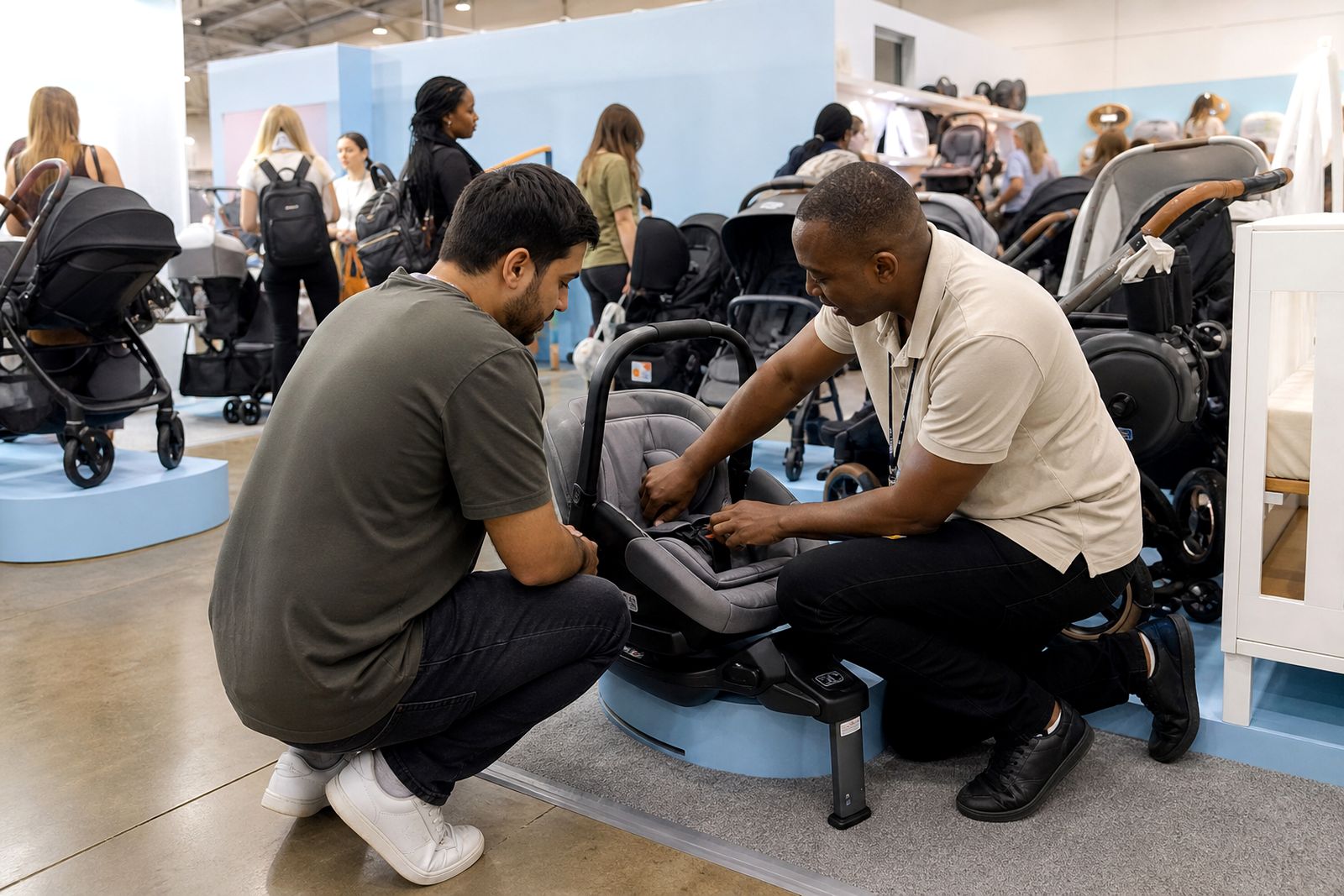
Start with your child, not the display
Before you compare fabrics, colours or cup holders, start with the basics: your child’s current size and stage. Car seats are sold by size ranges and usage stages, so it helps to know your child’s weight, approximate height and age before you walk in. If your baby is close to moving up a stage, tell the stand team that as well, because a seat that works for this month may not be the best buy for the next stretch.
It also helps to be honest about how you travel. A family doing short school runs in Johannesburg traffic may need something different from parents driving between Pretoria and Durban for weekends away. If grandparents, a lift club or a second car are part of the routine, say so. The more real your day-to-day use is the easier it is to compare properly.
- Check your child’s current weight before the expo if you can.
- Note whether you need a newborn seat, a next-stage seat or a longer-term option.
- Think about who will install and remove the seat most often.
- Consider whether the seat will move between more than one vehicle.
Ask how the seat fits your vehicle
A good car seat must fit the vehicle as well as the child. At the stand, ask which installation methods the seat supports and whether it suits your vehicle type. Some seats are easier in compact hatchbacks, while others need more cabin space front to back. If you have a double cab, a small SUV or an older sedan, mention that early in the conversation.
Ask whether the seat can work behind a taller driver or front passenger, especially if your household has long commutes. If you need three children across a rear bench, ask for the seat width and how the shape sits next to another child restraint. A seat can be safe and well made but still be awkward in a smaller car, and that matters every single day.
- Ask what installation options are available for your vehicle.
- Ask for the seat width and overall depth.
- Check if it works well in smaller cars or where front seat space is tight.
- Ask whether it is practical if you need more than one child restraint on the back seat.
- If you often use a second vehicle, ask how long transfer takes in normal use.
Look closely at everyday use
Parents use a car seat when they are tired, in a hurry, in summer heat and sometimes in light rain with a restless baby on one hip. That is why everyday handling matters. Ask the stand team to show you how the harness loosens and tightens, how the buckle works, and how the headrest or insert adjusts as your child grows. Try it yourself if you are allowed. A simple system often wins over one with lots of extra parts.
Cleaning is worth asking about too. Durban humidity, snack spills and sunblock marks can make covers grubby quite quickly. Ask which parts can be removed, whether the fabric washes easily and how long refitting takes. Also ask whether replacement covers or small parts are available if needed later. These are not glamorous questions, but they save frustration down the line.
If you will be lifting the seat in and out often, ask about its weight. If the seat stays installed most of the time, stability and ease of securing the child may matter more than the carry weight.
Understand limits, stages and how long it will last
One of the easiest ways to compare seats is to ask each stand the same set of lifespan questions. Do not just ask, “How long will this last?” Ask what the minimum and maximum child size limits are, when the next stage is usually needed, and what signs tell you it is time to move on. This helps you compare value in a useful way without guessing.
Be careful of choosing a seat only because it covers a wide age range on paper. What matters is whether it fits your child properly at each stage and whether the adjustment system is practical. A longer-range seat can be a good option, but only if it still gives a secure fit for your child now. If your baby was premature or has any special positioning needs, ask your clinic or midwife for guidance as well as the general product explanation at the expo.
- Ask for the child size range in clear terms.
- Ask when most families move to the next stage.
- Ask how the harness and head support adjust over time.
- Ask what inserts are needed for smaller babies and when they are removed.
- Ask what would make the seat no longer suitable.
Use a shortlist instead of comparing everything at once
Expo halls are busy, and after a few stands many products can start to blur together. The simplest fix is to build a shortlist as you go. Pick three seats that suit your child and vehicle, then compare those side by side using the same notes. That keeps the decision grounded in your needs rather than whichever stand you visited last.
A quick phone note works well. Write down the seat type, the installation method, what felt easy or fiddly, any concerns about vehicle fit, and whether the cover and harness seemed practical. If both parents or a grandparent are involved in transport, agree on the must-haves first. For some families that is compact size. For others it is easy transfer between cars, or a straightforward buckle when you are late for crèche. Keep the list short or you can end up more confused than when you started, which happens often.
- Choose your top three options before leaving the hall.
- Write one strength and one concern for each seat.
- Check that each option suits your main vehicle first.
- Let practical use decide ties, not extras you may never use.
Final checks before you make your decision
Before you commit, ask the stand team to repeat the key points slowly so you can make sure you heard correctly. Confirm the child size range, the vehicle fit, the basic installation method and the daily adjustment steps. If there is anything you do not understand, ask again. A clear explanation matters more than a fast sales chat.
It is also sensible to ask what support is available after the expo if you need help with installation or product use. Keep any leaflet or instruction summary you are given, and read it properly before first use. If your question is about your child’s health, breathing, feeding or positioning rather than the product itself, ask a clinic or midwife for advice. The expo is a good place to compare options under one roof, but the safest choice is always the one that fits your child, fits your vehicle and can be used correctly every trip.
What our Baby Expo customers say
Verified Google reviews
Questions we get asked
Should I choose the seat with the longest age range?
Not automatically. A wider stated range can sound useful, but the seat still needs to fit your child properly now and be practical in your vehicle.
Can I decide without knowing my car details?
It is better to arrive with basic vehicle details in mind, such as body type and rear seat space. Fit in the car is just as important as the child size range.
Can expo staff tell me what is best for my baby’s posture or feeding after travel?
They can explain product features in general terms. For advice about your baby’s health, positioning or feeding, ask your clinic or midwife.
Also worth a look



Exhibit or visit
Send a note through our contact form to ask about a stand or about visiting, and our team will reply with the details for the next city on the tour.
Open the contact form