

Pram checklist
A pram can look right on the stand and still feel wrong after a week of school runs, pavement cracks and boot packing. Use this checklist to test the parts that matter before you buy.
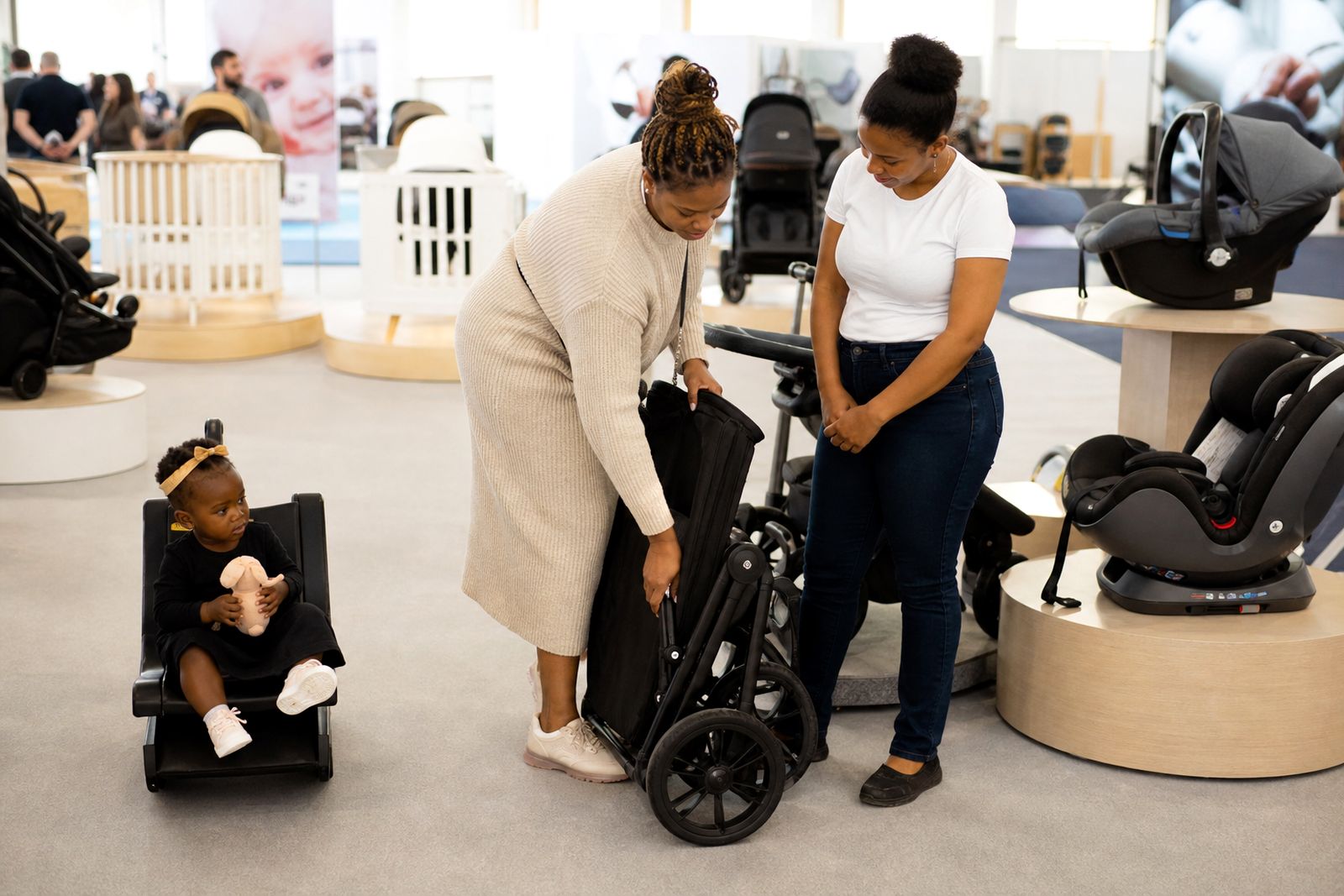
Start with your real daily route
Before you test any pram, think about where it will actually go. A smooth shopping centre floor is very different from broken pavements, gravel parking areas, apartment lifts and tight coffee shop aisles. If you mostly walk in the suburbs, wheel size and suspension may matter more than a very compact fold. If you drive often, boot space and one-hand folding usually move to the top of the list.
Write down your normal week: nursery drop-off, clinic visits, mall trips, walks around the block and travel to family. That quick list helps you ignore features you do not need and focus on what you will use every day. Many parents buy on first impressions then later realise the handle is too low, the basket is too small or the folded frame is awkward to lift.
- Measure your car boot opening and depth in centimetres.
- Check whether you need the pram to fit in a lift or narrow passage.
- Think about kerbs, paving and uneven parking bays near home.
- Decide if the pram will be used mainly by one parent or shared by caregivers of different heights.
- Note whether you need it from newborn stage or only once baby can sit up.
Test the fold, lift and boot fit
Folding is where many good-looking prams lose points. Ask the exhibitor to show the fold once, then do it yourself more than once. Try it with one hand on the handle and your nappy bag over your shoulder, because that is closer to real life. A fold that needs perfect timing or a lot of force can become frustrating very quickly.
Lift the folded pram properly and judge the weight honestly. A compact frame may still feel heavy if the balance is awkward. Check if it locks closed on its own and whether it stands when folded. A pram that falls open in the boot or tips over in the hallway can be a nuisance, specially when you are carrying baby as well.
- Can you fold and open it without removing a seat or canopy?
- Does it fit through the boot opening, not only inside the boot once loaded?
- Can you lift it in and out without twisting your wrist?
- Does the folded frame stay clean, or do wheels sit against the seat fabric?
- Is there a carry handle or grip point in a sensible place?
Check wheels, steering and brakes
Push the pram for more than a few metres. Turn in a tight circle, go over a mat edge if there is one, and press lightly on the handle as if climbing a kerb. Steering should feel predictable rather than twitchy. Small front wheels can be fine indoors but may struggle on rough paving or brick paths. Larger wheels generally cope better outdoors, though they can take up more boot space.
Test the front swivel lock if the model has one. Then check the brake with open shoes and closed shoes if possible. You want a brake pedal that is easy to press without scraping your toes. Also release it again to see if it sticks. In winter rain or on Durban humidity days, small moving parts can feel different after regular use, so simple mechanisms are often easier to live with.
Look at wheel removal too. Quick-release wheels can help with storage, but only if refitting them is straightforward. If the pram pulls to one side on a flat surface, ask why before you carry on.
Seat comfort, harness and recline
The seat should suit your child now and still work a few growth stages later. Check backrest height, seat depth and how easy it is to adjust the harness. A harness that is difficult to tighten evenly may leave one strap looser than the other. Buckles should feel secure but not so stiff that every outing turns into a fight.
If you need newborn use, ask exactly how the pram is set up for a very young baby and whether extra parts are required. Keep general health questions for your clinic or midwife, as they can advise on what is suitable for your baby’s stage. For older babies, test the recline range and footrest position so naps are more comfortable.
- Does the seat sit upright enough for an alert toddler?
- Can the seat recline smoothly without waking a sleeping baby?
- Are the harness height positions easy to change as baby grows?
- Is the buckle simple for adults to use but secure against little hands?
- Does the canopy give proper shade when the seat is reclined?
Storage, handle height and parent comfort
Parents often focus on baby comfort and forget their own. Check the handle height and grip shape with the pram loaded if possible. If more than one caregiver will use it, both should push it. A handle that is too low can lead to sore shoulders, while one that is too high may reduce control on slopes and kerbs.
Then inspect the basket. A basket can look large until the seat is reclined or the access opening is blocked by the frame. Try reaching in from the back and the sides. Think about nappies, a spare blanket, snacks, wipes and a small grocery stop. If you need cup holders, organisers or weather covers, ask whether they are included or optional rather than assuming anything.
Also look at the canopy window, fabric removal for cleaning and how easy it is to wipe mud off the frame. In a family pram, little practical details matter more than fancy extras.
Use this final compare-and-decide list
Once you have narrowed your options, compare only the models that suit your routine. It helps to score each one straight after testing while the feel is still fresh. If you are visiting the expo, use your phone notes and take a minute between stands. The pram that seemed best at first can drop down the list after a proper side-by-side check.
- Best fold for your car and storage space.
- Best push on the surfaces you use most.
- Most comfortable handle height for regular walks.
- Seat and harness that will still work as your child grows.
- Basket access that stays useful when the seat reclines.
- Canopy coverage for sun and light drizzle.
- Cleaning effort after crumbs, spills and muddy wheels.
- Any extra parts needed before the pram suits your baby stage.
If you are unsure between two options, go back and fold both again. Push them one more time and picture the school run, the boot, the pavement outside your gate. That small pause can save you from buying a pram that looks neat but does not suit everyday South African life.
What our Baby Expo customers say
Verified Google reviews
Questions we get asked
Should I buy a pram before baby is born?
Many parents do, especially if they want everything ready early. The key is to check newborn suitability carefully and ask your clinic or midwife for general guidance on what your baby may need.
How long should I test a pram before deciding?
Longer than a quick push up and down the aisle. Fold it yourself, lift it, turn it in a tight space and compare it with at least one other option before you decide.
What matters more: compact fold or bigger wheels?
It depends on your routine. If you drive often and have a small boot, compact fold may matter most. If you walk on rough pavements or gravel, bigger wheels can make daily use easier.
Also worth a look

Exhibit or visit
Send a note through our contact form to ask about a stand or about visiting, and our team will reply with the details for the next city on the tour.
Open the contact form